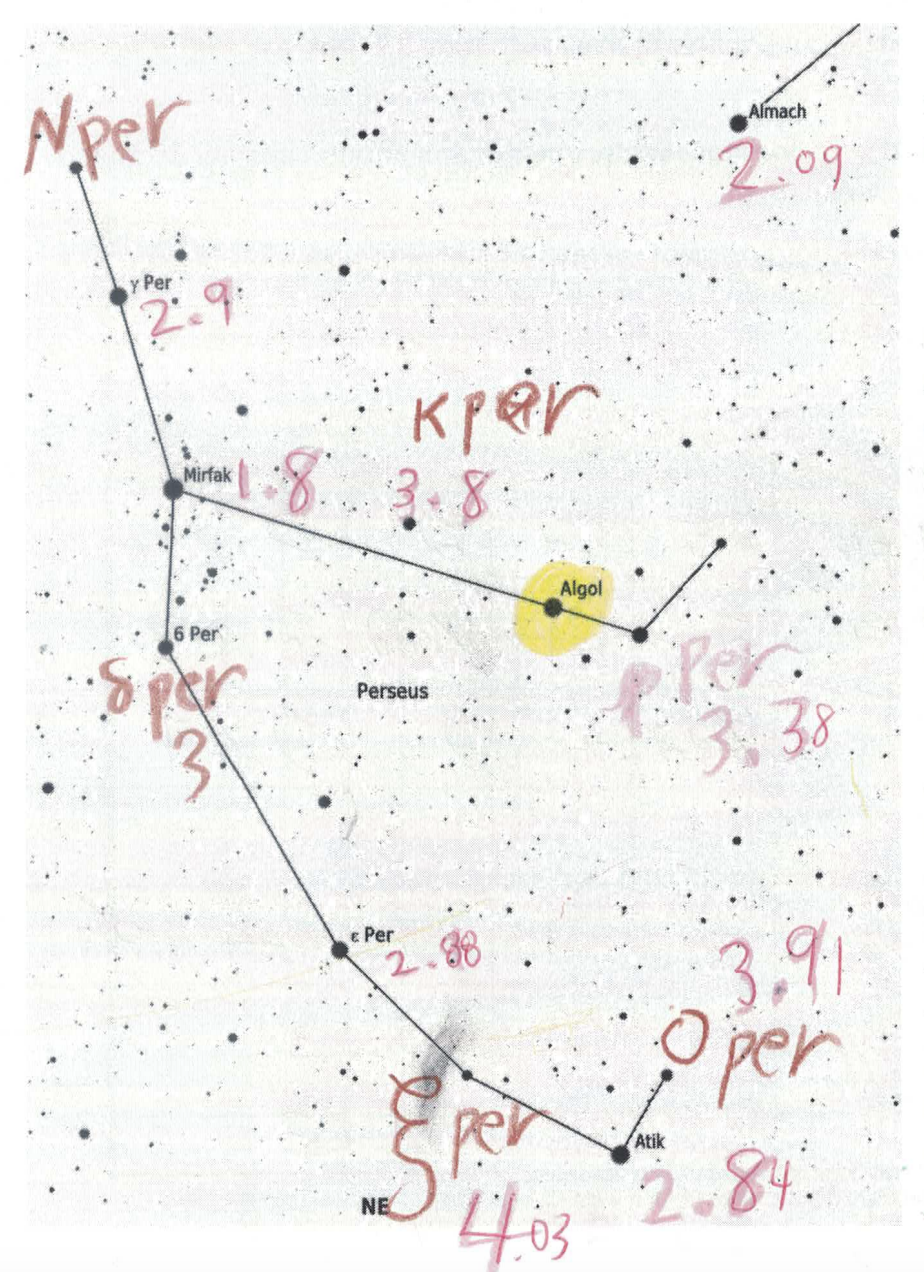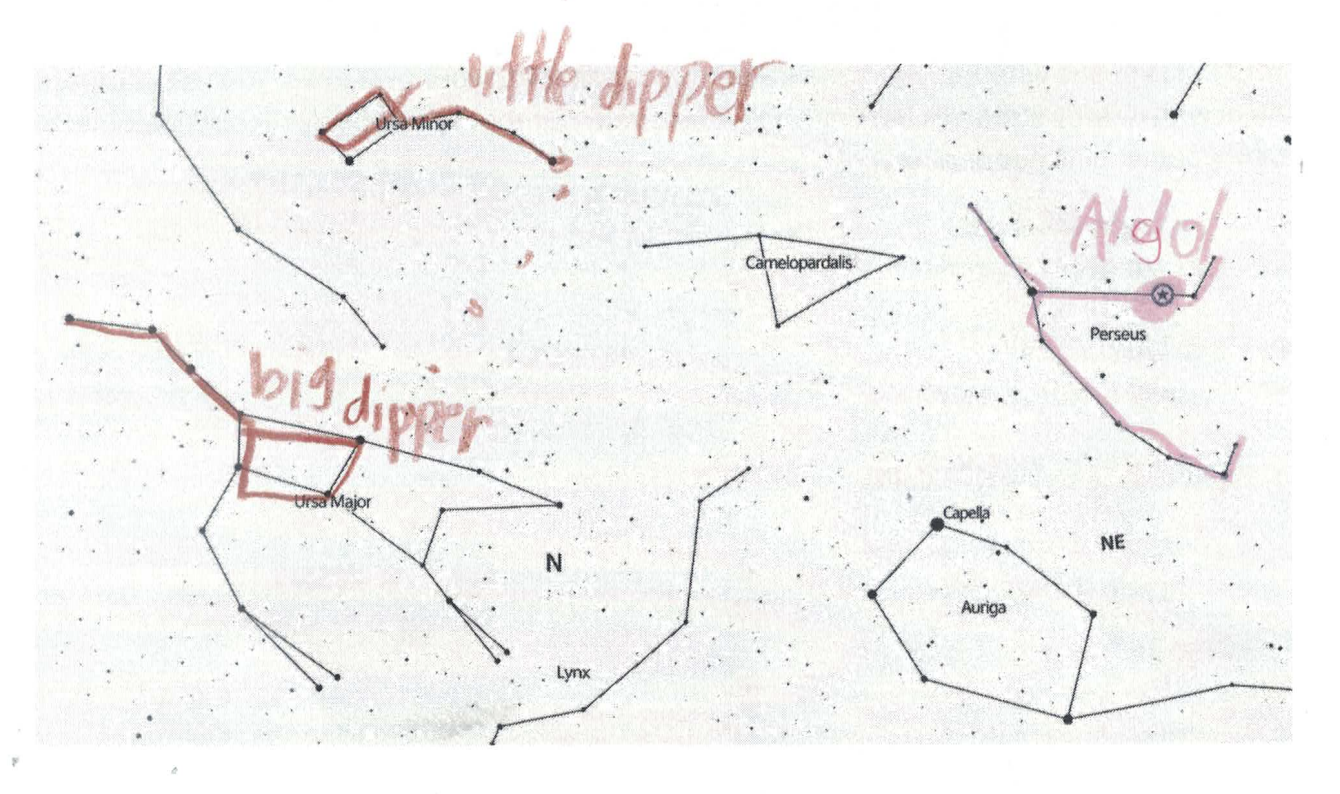
This week, I looked up at the night sky to find out if I could observe an eclipse. Algol is a star in the constellation of Perseus (see figure 1). Do you know the story of Perseus? It’s a Greek myth where Perseus had to fight a monster called Medusa. Medusa had snakes as hair and whoever saw her would turn into stone. Perseus killed her and brought her head to save his mother. If you look at the constellation, you can see Perseus holding Medusa’s head. Algol is one of Medusa’s eyes.
The brightest star in the Perseus constellation is Mirfak. It has a magnitude of 1.8. Magnitude is the brightness of a star. The smaller the number, the brighter it is. Where we live, we can see stars with magnitudes up to 3 or 4 with our eyes. Algol is special because it’s actually not one star, but three. And these three stars orbit each other. We focused only on the two biggest stars. Ancient Egyptians thought this star was interesting because it seemed to wink every couple of days. It would get dimmer over a few hours and brighten up again.
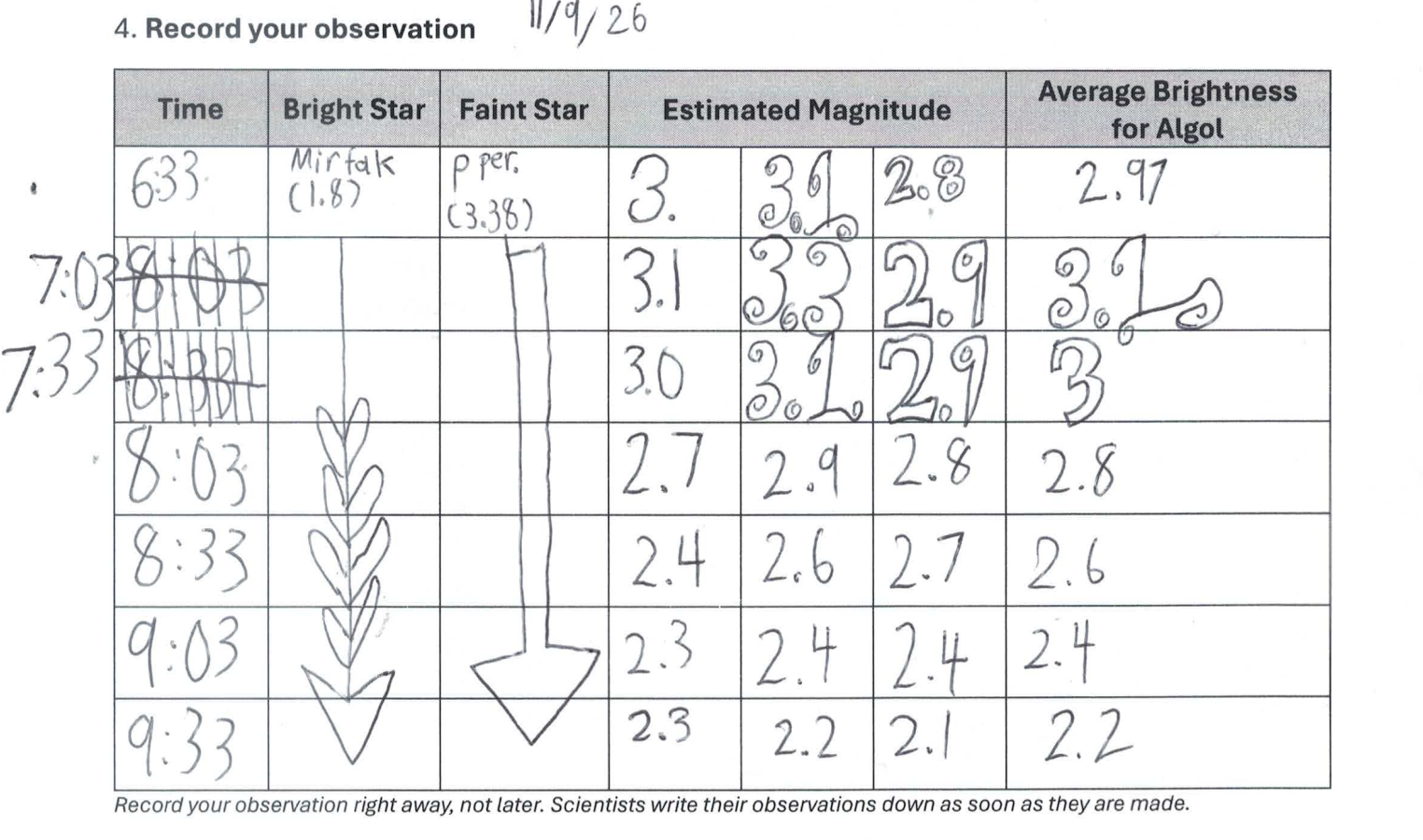
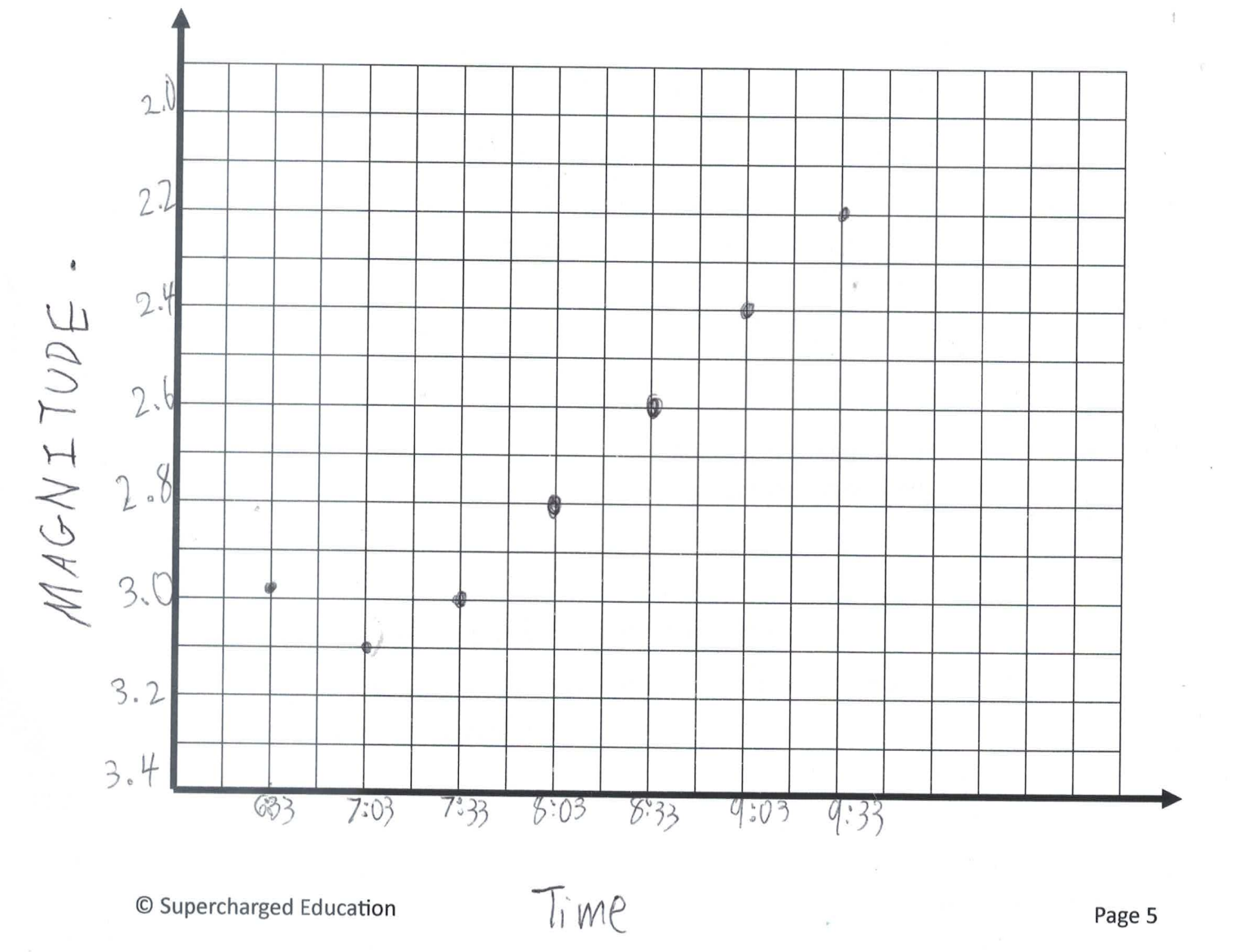
Every thirty minutes, we went outside to find Algol. We compared the brightness of Algol to one star that was brighter and one star that was dimmer. For the brighter star, we used Mirfak. For the dimmer star, we used ρ Per (rho Persei) with magnitude of 3.38. We estimated the magnitude three times and then found the average by adding up the numbers and dividing by 3 (see figure 3). Then we put the results on a graph (see figure 4). The dip that you see on the graph is actually showing the eclipse. The bigger star is crossing in front of the smaller star, blocking its light. That is why the magnitude increases and Algol looks dimmer. After the eclipse is over, you can see both stars shining again, which makes Algol look brighter.
My favorite part about this experiment was looking at the stars and reading the Greek myths.