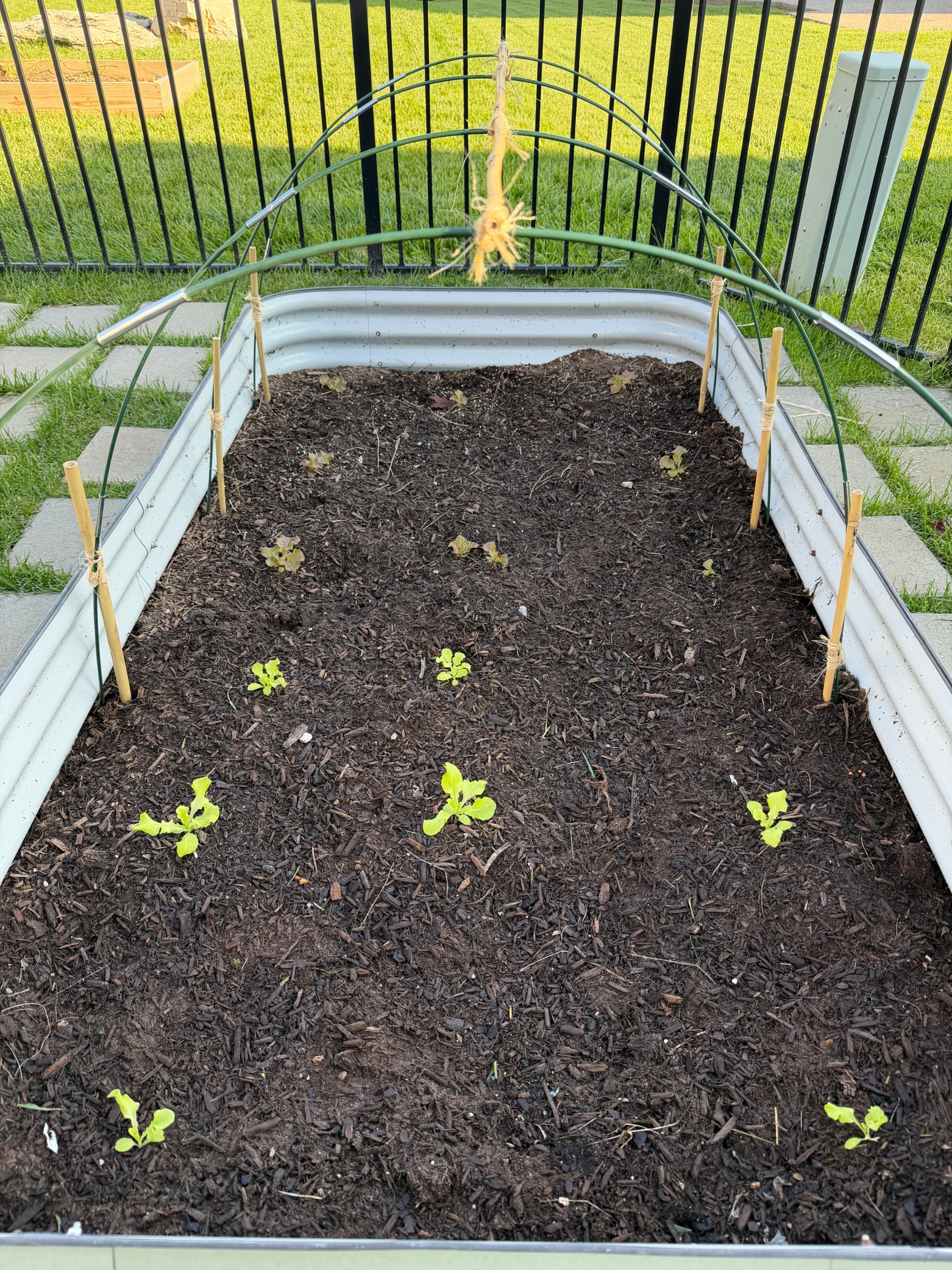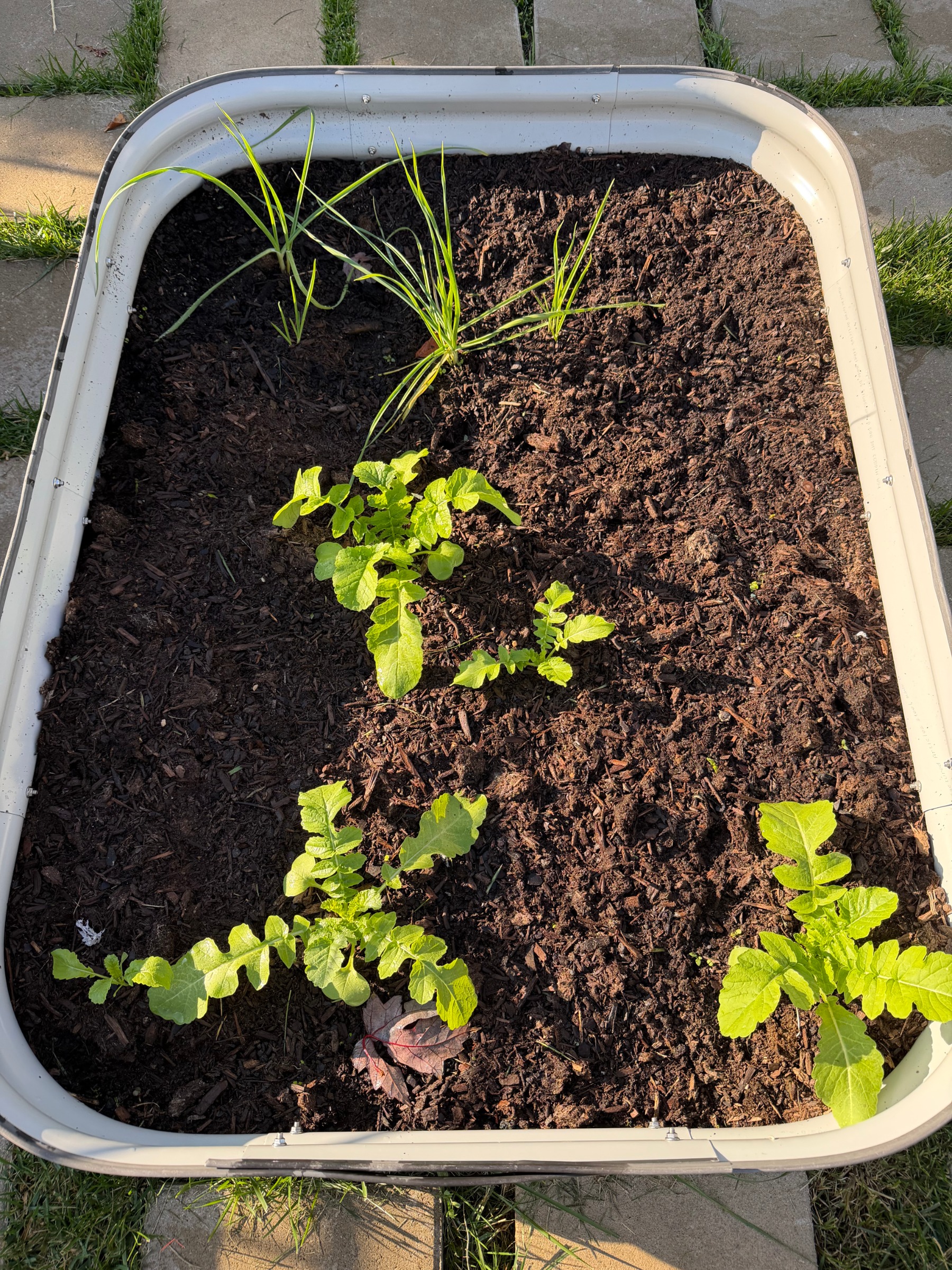
We started growing cool vegetable crops in our raised beds last month. One of the beds has five lovely white radishes growing in it along with some garlic. (see photo) Another bed has loose leaf lettuces growing in it. We’re growing Red Sails and Black Seeded Simpson because I read that they are great with the cool season. Because we planted the lettuce a little later (October 10th) than recommended, they are currently still small, meaning there are some open spaces in between them. Well. This morning, we had a surprise. It looked like a cat came over to defecate in our lettuce bed. We think it’s a cat because the poop was covered up and soil around it was ruffled. Initially, I thought all that was needed is to get the thing out of my bed. But after doing some more research, my simple assumption was completely wrong.
First, the poop and the surround soil (about 6-12 inches around the area) has to be double bagged and thrown out with trash. And sadly, I had to dig up several of my baby lettuces since they were too close to the area and one of them had soil sprinkled on it. Why, you say? Cat poop can carry Toxoplasma gondii, round worms, hook worms, Salmonella, and whatever else there is. You do not want that stuff in your vegetable garden! Those parasites, especially Toxoplasma gondii, will not get killed with thorough washing. Thankfully, it apparently takes 1-5 days for Toxoplasma to become infectious and about 2-4 weeks for roundworms. That’s why I got rid of the surrounding soil as well. What damage a cat can inflict on a garden bed and on human health!
I wish I could get the electric fence going right now, but that would take several days. I needed something immediately since I read that a cat will most likely come back the next night to do its business again. Some say that roughly crushed egg shells would do the trick, but then you would have to wash the shells and dry them before crushing them. Also some people say that you need quite a large amount or else the cat would just push it aside. Too much work for too little time. So I opted for something else. I’ve read that plastic forks with the prong side up in the garden bed happened to work decently. I didn’t want to waste forks though. Nor did I want plastic in my vegetable bed. So my daughter helped me put natural spikes on the soft soil to deter the cat if it came back. We cut back our chives yesterday and saved the seeds. We have plenty of seeds. Let us know in the comments if you want some and we will bring them to church on Sunday. Anyways. Those stalks the flowers grew on were pretty decent in sturdiness, especially as they dried. We stuck them in the soil like spikes on any open spaces in all of our beds. Also, I sprinkled some cedar mulch to add roughness to the soil. What a mess and extra work a cat can leave for a human being!
We had a hoop system built for the lettuce bed a couple of days ago because we knew we had to protect it from the cold eventually. (see photo - this was before the cat surprise) We used fiberglass poles for the hoop and bamboo stakes to stabilize the hoop using either a sisal or a jute twine (I forget which). The boys learned how to do a double clove hitch, wrapping the parallel hoop and stake together, frapping, and making square knots. Then we added a horizontal bamboo on top of the hoops for added strength. For that, we used a clove hitch, square lashing, frapping, and a square knot. It looked neat. We were just waiting for the temperature to drop to add on a row cover. But the cat struck before that could happen. So now, we plan to cover the lettuce every night with the row cover. Yes, the cat might be able to slash through the cover or slip in somehow, but if it does, we are hoping our lovely spikes will make it think twice before it does its thing. I also scattered some used coffee grounds around the bed.
I realize that I really dislike cats - especially neighborhood cats. They are good for nothing. Barn cats or farm cats at least do some useful work. But house cats? What do they do other than cause allergies and mess in other people’s gardens? Maybe I just need some BB guns and have the kids practice their aim if pesky animals ever come near the garden bed again. And so I spent the entire morning researching on various methods of how to prevent animals (like CATS) from getting into the yard. I’ve learned some about electric fencing (which I plan to eventually use), ultra sonic solar powered anti-cat gadgets, motion activated water sprinklers, and some basic things people say that work. Productive morning I’d say. (Was it?) Well, now you know how to deal with invasive animals doing invasive stuff in your garden. Having a working electric fence before planting would have been the best way to start. Don’t make the same mistake like us! If you have a better idea, please let us know.