The War of the Roses (Part I)
What is the War of the Roses? It sounds very nice. With beautiful petals and … Nope. It’s not a flowery battle. It’s a chaotic mess. And it all starts with one king. His name was Henry VI.
I. HENRY VI
What if you don’t know who Henry VI is? Henry VI was a deeply religious medieval king who accidentally inherited the English throne at nine months old. He was also the founder of Eton College. Now that you know who Henry VI is, let’s go back to the War of the Roses.
II. WHY HENRY VI BEGAN TO LOSE POWER
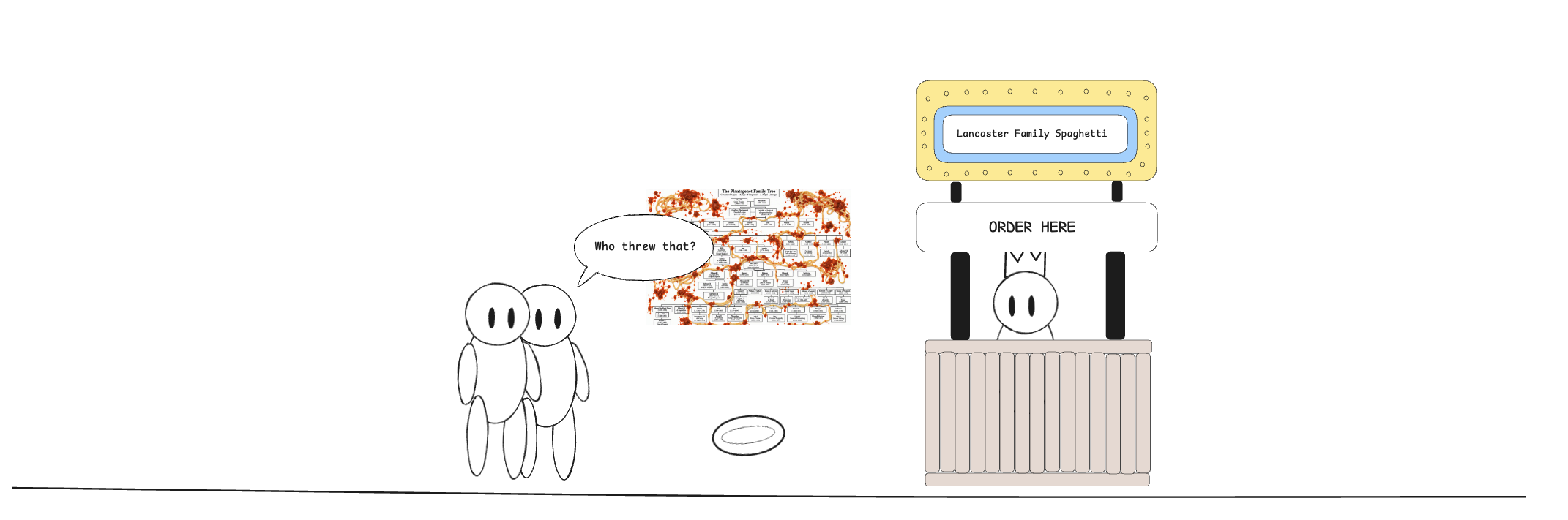
To understand why Henry VI’s reign turned into an absolute disaster, we need to rewind to his grandfather, Henry IV. Now, Henry IV had become king in 1399 after overthrowing his cousin, Richard II. And here’s the problem: Henry’s claim to the throne wasn’t exactly the most convincing thing ever submitted to a medieval courtroom. Both men descended from Edward III, but Richard II descended from Edward III’s eldest son, Edward the Black Prince, while Henry descended from John of Gaunt, a younger son. In other words, Henry had used the ancient supreme art of ‘Finders Keepers.’ Unfortunately, this meant his descendants inherited a throne with a rather suspicious family receipt. His son, Henry V, temporarily distracted everybody by becoming a military superstar, defeating the French at Agincourt in 1415 and making England feel like it owned France. But then, in 1422, Henry V died, leaving behind his nine-month-old son, Henry VI. I bet you don’t want to hear about lullabies and baby talk, so for your sake (and because history probably doesn’t record it) we will skip Henry’s young life. Henry VI eventually grew up, but unlike his father, he wasn’t particularly interested in conquering France and collecting enemy castles as souvenirs. He was deeply religious, preferred peace, and was much more interested in prayer than warfare. Admirable qualities, certainly, but unfortunately, medieval England was not exactly some peaceful yoga relaxation hotel. Powerful nobles began competing for influence, and one particularly important nobleman was Richard, Duke of York. Richard had royal blood himself and could trace his ancestry back to Edward III through another branch of the family. As you should begin to see, at that time the royal family tree of England was less of a tree and more like spaghetti thrown on a wall. Things got worse in 1453 when Henry VI suffered mental illness and became unable to govern. The government needed somebody to take charge, so guess who got appointed Protector of the Realm? Hint: He’s the one particularly important nobleman we talked about. Richard of York! Except there was one small issue: Henry had a wife. And she was NOT happy. Not happy at all. Queen Margaret of Anjou was determined to protect her husband’s power and the rights of her son, Edward of Westminster. She was not particularly enthusiastic about watching Richard of York accumulate power while her husband was unable to rule. Imagine your husband being king, another man essentially taking over his job, and everybody acting like this is a perfectly normal Tuesday. Margaret wasn’t about to sit quietly and knit a sweater. She fought to preserve the Lancastrian position while Richard and his supporters repeatiadly challenged the king’s government. Soon, England had two rival political factions: the Lancastrians, supporting Henry VI, and the Yorkists, supporting Richard of York. And what happens when two groups of powerful medieval nobles disagree about who should control the country? They sit down to have a nice cup of tea and discuss their differences? OF COURSE NOT. THEY GET AN ARMY. THEY CALL THE LIGHT BRIGADE. The stage was set for a royal family drama, complete with questionable family claims and enough aristocratic action to fill approximately seventeen seasons of television. England was getting ready to watch the theatrical performance of a lifetime. Literally! And we haven’t even got to the actual war yet!
III. WARWICK
Well, congratulations, England. You’ve officially reached the point where nobody can have a normal disagreement anymore. It’s May 1455, and Richard, Duke of York, is concerned about his position. Remember, he had previously been Protector of the Realm, but after Henry VI recovered from his illness, Richard lost much of his political influence. Meanwhile, Queen Margaret of Anjou was busy getting her supporters more power. Richard deduced what he needed to do. He needed friends. Powerful friends. Rich friends. Friends with armies. Enter Richard Neville, Earl of Warwick. Warwick was one of the wealthiest and most influential noblemen in England, and he wasn’t very fond of the people surrounding Henry VI. In fact, Warwick and York had plenty in common: both were annoyed with the king’s government and both wanted greater political influence. So, naturally, they became allies. There was one teeny tiny problem, and you know that whenever there is a teeny tiny problem, it probably isn’t a teeny tiny problem. York wanted political change. Warwick wanted to bust down the government with firepower and armies and destruction. York was saying, “I don’t have a problem with the monarchy. I have a problem with the people running it!” Warwick, meanwhile, was considerably less patient. He had soldiers, money, and determination to confront the royal government. What could go wrong? The two sides eventually met at St. Albans on May 22, 1455. Negotiations were attempted, with the royal side sending messengers to discuss peace. York demanded the arrest of one of Henry VI’s best generals and his men to be tried. The king refused. After all the intense negotiations, threats, and diplomatic gymnastics, it didn’t matter. England was bound to explode.
IV. LANCASTRIANS LOSE THEIR GRIP
Well, remember Henry VI? The king with the religious personality, the educational ambitions, and the unfortunate tendency to have other people run his government? His problems were about to get considerably worse. After the First Battle of St. Albans in 1455, Richard, Duke of York, had gained control of the government, while Henry VI remained king in name. York was appointed Protector of the Realm again, and his ally Warwick received the important position of Captain of Calais. York had learned the art of Monopoly: they controlled the government, had the important positions, and had just removed several of their biggest enemies from the board. However, Queen Margaret of Anjou was not going to sit around and let that happen. She was determined to protect her husband. She began gathering support for the Lancastrian cause yet again, and in 1456 York lost his position as Protector. The queen had regained influence, and the two factions continued their political tug-of-war. England was now experiencing the medieval equivalent of having two people fighting over the television remote, except the television was an entire kingdom and the remote was a crown. The uneasy peace eventually collapsed in 1459. The Lancastrians and Yorkists returned to fighting, and Richard of York eventually fled to Ireland while Warwick escaped to Calais. The Lancastrians temporarily regained control, thinking they had finally managed to put the Yorkists in the naughty corner. Unfortunately, Warwick came back in 1460, and this time the Yorkists were ready for another round. On July 10, 1460, the Yorkists defeated the Lancastrian army at the Battle of Northampton. King Henry VI was captured in his tent. Yes, AGAIN. Henry was becoming less of a battlefield commander and more of a collectible. He was taken to London, where the Yorkists held control of the king and government. But Richard of York had a much bigger ambition now: THE THRONE ITSELF. In October 1460, York formally claimed the crown, arguing that his royal ancestry gave him a stronger hereditary claim. However, Parliament came up with a rather unusual compromise called the Act of Accord. Henry VI would remain king for the rest of his life, but Richard of York and his descendants would inherit the throne afterward. There was just one problem: Henry already had a son! Prince Edward of Westminster had essentially just been informed that his inheritance had been cancelled by Parliament. Imagine finding out that your father is king, but some duke has just been added to the will and YOU have been removed. Guess who wasn’t happy? Margaret was furious and demanded payback. And so, the fighting continued. In December 1460, Richard of York marched north to confront the Lancastrian forces, but was defeated and killed at the Battle of Wakefield. His head was reportedly displayed on a spike at York, complete with a paper crown. Charming. His son, Edward, Earl of March, now took up the Yorkist cause. Meanwhile, Queen Margaret continued campaigning for her son, and the Lancastrians won another victory at the Second Battle of St. Albans in February 1461. Henry VI was reunited with his forces, but his position was rapidly spiraling down. Edward of York was proclaimed King Edward IV in London, and in March 1461 he defeated the Lancastrians at the enormous Battle of Towton. The Lancastrian army was shattered, and Henry VI, Margaret, and their son fled into exile. Edward IV was now king, and the Yorkists had officially taken the crown. But what happened to Henry? Well, after several years on the run, he was finally captured in 1465 and imprisoned in the Tower of London. The former king had gone from ruling England to living behind medieval security arrangements. His royal career had taken a rather unfortunate turn from God Save the King to Somebody Please Unlock the Door. And just when everyone thought the Lancastrians were finished, somebody decided to step in. (Hint: It wasn’t Margaret.).
To be continued…